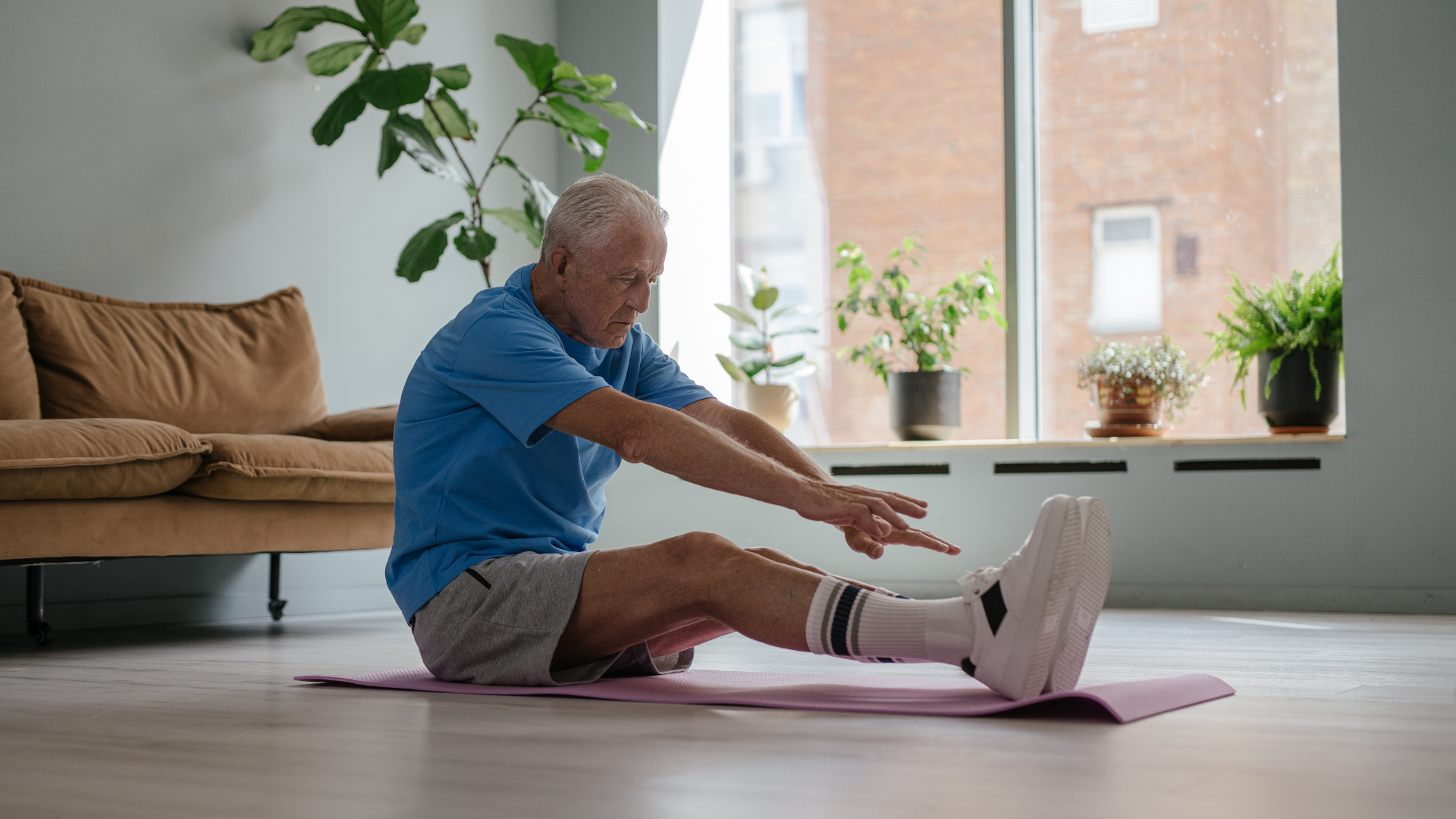

When designing a resistance training program for healthspan, the overarching directive is simple: stay in the game.
Resistance training is not merely about aesthetic hypertrophy or chasing weight room records. At its core, strength training is functional preparation for living—training your body to execute the fundamental physical movements that daily life requires so that you remain capable, agile, and independent in your 80s and beyond.
Maintaining skeletal muscle mass, physical strength, and neuromuscular power are among the strongest independent predictors of functional autonomy and overall survival as we age.1,2 Major medical consensus bodies—including the American Heart Association (AHA) and the International Conference on Frailty and Sarcopenia Research (ICFSR)—recommend resistance training as a frontline clinical intervention to preserve lifelong physical capacity.1,2
Traditional barbell lifts are not inherently dangerous when loaded and performed properly.3 However, the single greatest threat to long-term consistency is an avoidable orthopedic injury. An acute injury forces weeks or months of enforced inactivity, triggering rapid muscle atrophy that becomes exponentially harder to rebuild in later decades.
Avoiding injury and managing joint stress is far more valuable for healthspan than pushing past safe biomechanical limits. By structuring your routine around six fundamental movement patterns and selecting exercise variations tailored to your individual joint mechanics, you can systematically build functional strength while protecting your joints for life.
1. Prescriptive Parameters: Intensity (% 1-RM), Repetitions, RIR, and Progression
To achieve optimal musculoskeletal and cardiovascular adaptations, exercise prescription must define volume, intensity, and progression.1,2
Loading Intensity (% 1-RM) and Repetition Ranges
Starting Intensity: For beginners or previously sedentary adults, initiate training at a moderate load of 40% to 60% of 1-repetition maximum (1-RM).1
Progressive Loading Target: Progress toward 60% to 80% of 1-RM for 1 to 3 sets of 8 to 12 repetitions per exercise, performed 2 or more days per week covering all major muscle groups.1,2
Heavy Strength Nuance: While moderate loading (60% to 80% 1-RM) provides robust healthspan and metabolic benefits, clinical research demonstrates that heavy strength training (≥80% 1-RM) yields superior adaptations in maximal strength and rate of force development in capable older adults.4
Proximity to Failure: Repetitions in Reserve (RIR)
Exercises should generally be performed at a high effort, leaving 1 to 2 repetitions in reserve (RIR).5
Strength vs. Hypertrophy Nuance: Systematic review data show that complete momentary muscular failure is unnecessary for maximal strength gains.5 While muscle hypertrophy may derive a slight additional benefit from driving sets very close to failure, terminating sets at 1 to 2 RIR optimizes strength adaptations while minimizing joint strain and systemic recovery demands.5
Preserving Neuromuscular Power
Neuromuscular power (the ability to generate force quickly) declines faster with age than absolute strength and is strongly tied to physical function and balance recovery.2 Incorporating fast concentric exertion (pushing or lifting the weight forcefully at 20% to 80% 1-RM, followed by a controlled 2- to 3-second lowering phase) helps preserve muscle power.2
2. Exercise Modalities: Free Weights vs. Machines
A common assumption in fitness culture is that free-weight compound exercises are inherently superior to machine-based training. However, randomized trials and meta-analyses demonstrate that free weights and machines produce comparable long-term adaptations in muscle hypertrophy, strength, and overall functional performance.2,6
The choice between modalities depends on individual goals, joint comfort, and adherence:
Free Weights: Demand greater acute muscle activation and multi-planar coordination, as the lifter must stabilize the load independently. Strength gains from free weights are often specific to free-weight movement patterns.6
Machine-Based Exercises: Provide external stability and a guided path of motion. Machines allow individuals to safely target specific muscle groups at a high effort (1 to 2 RIR) without requiring complex multi-planar balance or risking dropped weights.2,6
The Clinical Takeaway: Neither modality is universally superior. A practical healthspan framework utilizes free weights to build multi-planar coordination and machines to safely target specific muscle groups without balance constraints.2,6
3. Unilateral Work, Stability, and Fall Prevention
Incorporate unilateral exercises (single-arm or single-leg movements) to develop single-limb strength, address bilateral strength asymmetries, and build task-specific movement control.2,7
Unilateral Exercise Examples
Lunges (walking lunges, reverse lunges, or Bulgarian split squats)
Single-Leg Romanian Deadlifts (RDLs)
Suitcase Carries (single-arm loaded carries)
Renegade Rows (plank-position single-arm rows)
Clarifying Fall Prevention
While unilateral strength exercises improve single-limb force production, clinical trial evidence shows that resistance training alone is insufficient to prevent falls.7 Postural control adaptations are highly task-specific.7
Effective fall prevention requires combining resistance training with dedicated, explicit balance and agility challenges (such as dynamic balance drills, single-leg standing tasks, and obstacle navigation) accumulated over a sustained timeframe (~50 or more total intervention hours).2,7
4. The 6 Core Movement Patterns
Organizing your workout routine around six primary movement patterns is a practical coaching heuristic designed to ensure balanced, full-body functional development:2
Visual Demonstrations Note: To review proper setup, coaching cues, and video demonstrations for any exercise listed below, reference established exercise databases such as muscleandstrength.com.
1. The Squat (Lower Body Knee-Dominant)
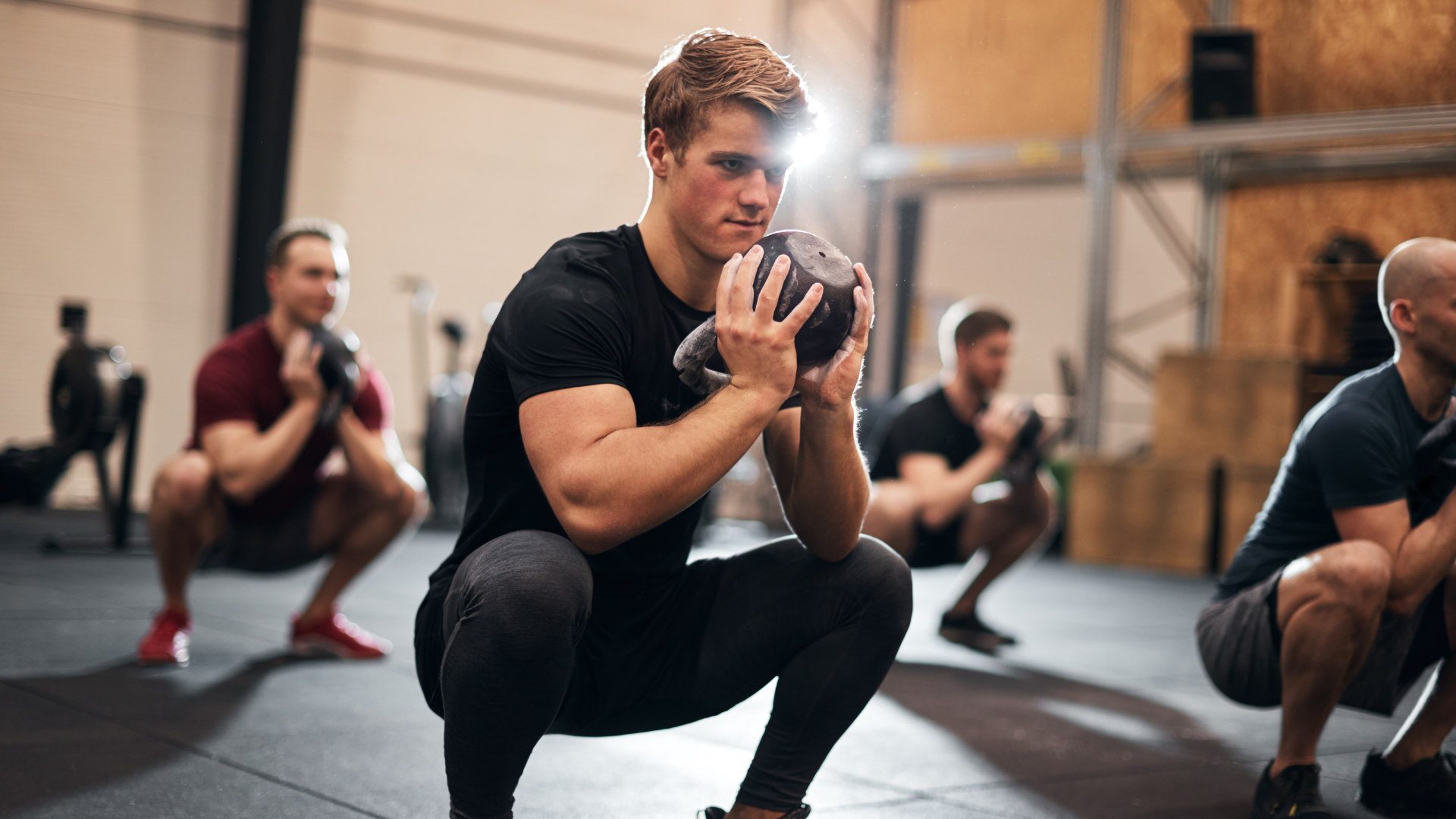
Exercise Examples: Goblet squats (pictured above), belt squats, leg press, bodyweight air squats.
Clinical Purpose: Strengthens the quadriceps, glutes, and core. Translates directly to standing up from a low chair, toilet, or car seat—a fundamental Activity of Daily Living (ADL) required for physical autonomy.2
2. The Hip Hinge (Posterior Chain Dominant)
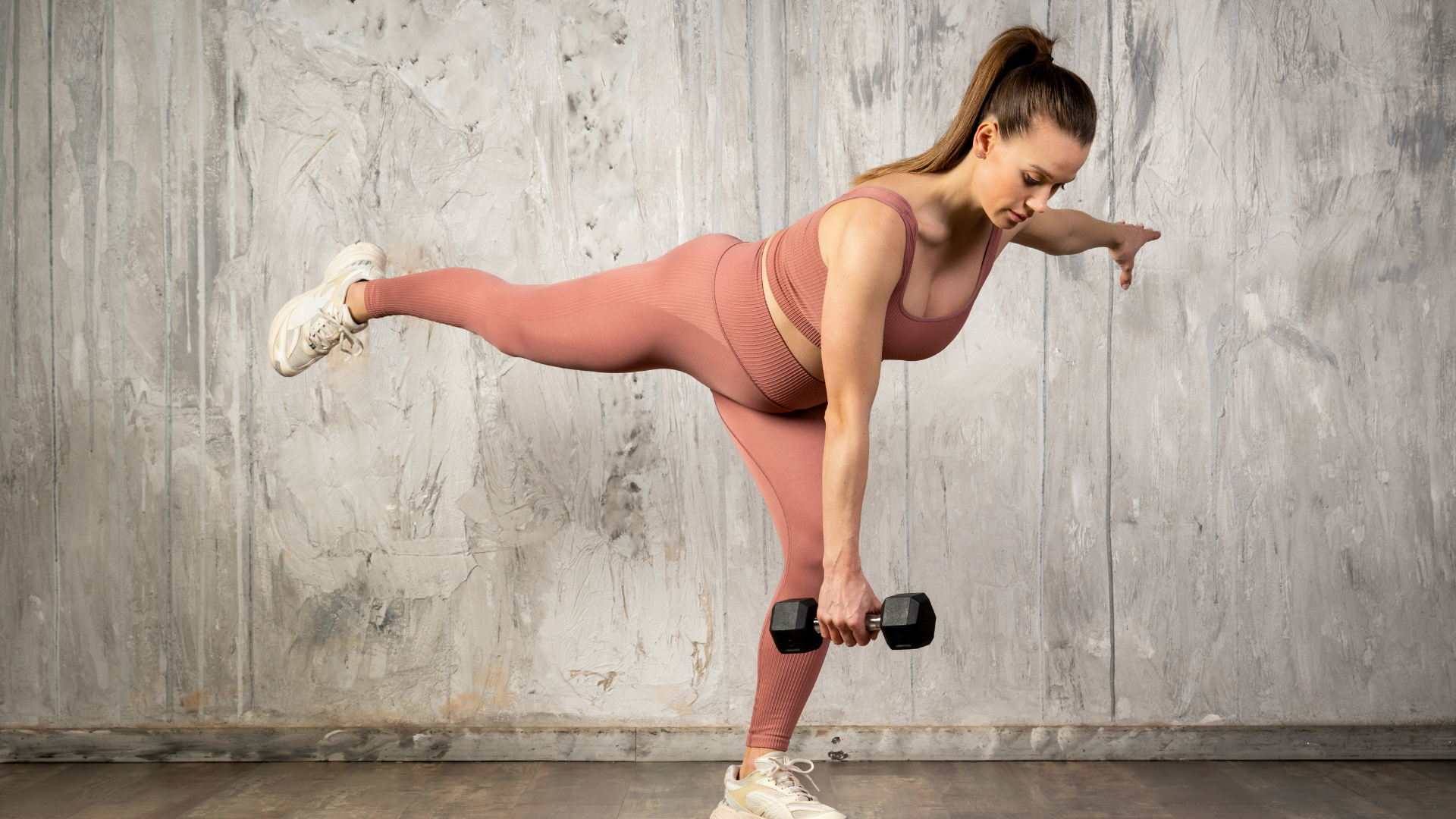
Exercise Examples: Trap bar deadlifts, single-leg RDLs (pictured above), kettlebell swings, leg curls.
Clinical Purpose: Strengthens the hamstrings, glutes, and spinal erectors. Trains the body to lift objects off the ground efficiently by distributing mechanical load across the posterior chain.
3. The Push (Upper Body Horizontal & Vertical Extension)
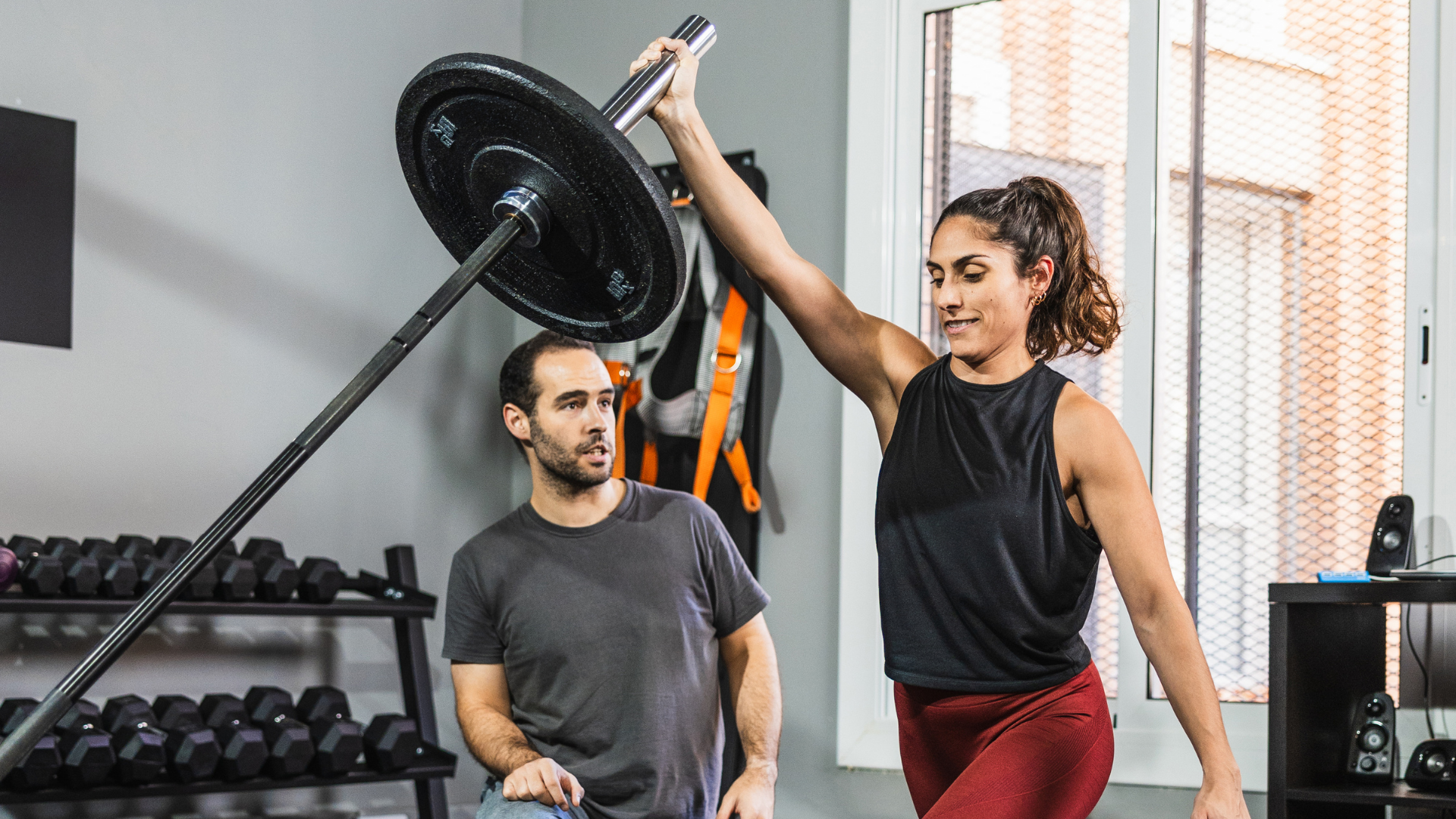
Exercise Examples: Dumbbell floor press, landmine press (pictured above), push-ups, chest press machine, dips.
Clinical Purpose: Builds strength in the chest, anterior deltoids, and triceps. Vital for pushing open heavy doors, rising from a reclining position, or pushing yourself up off the floor after a fall.
4. The Pull (Upper Body Horizontal & Vertical Flexion)
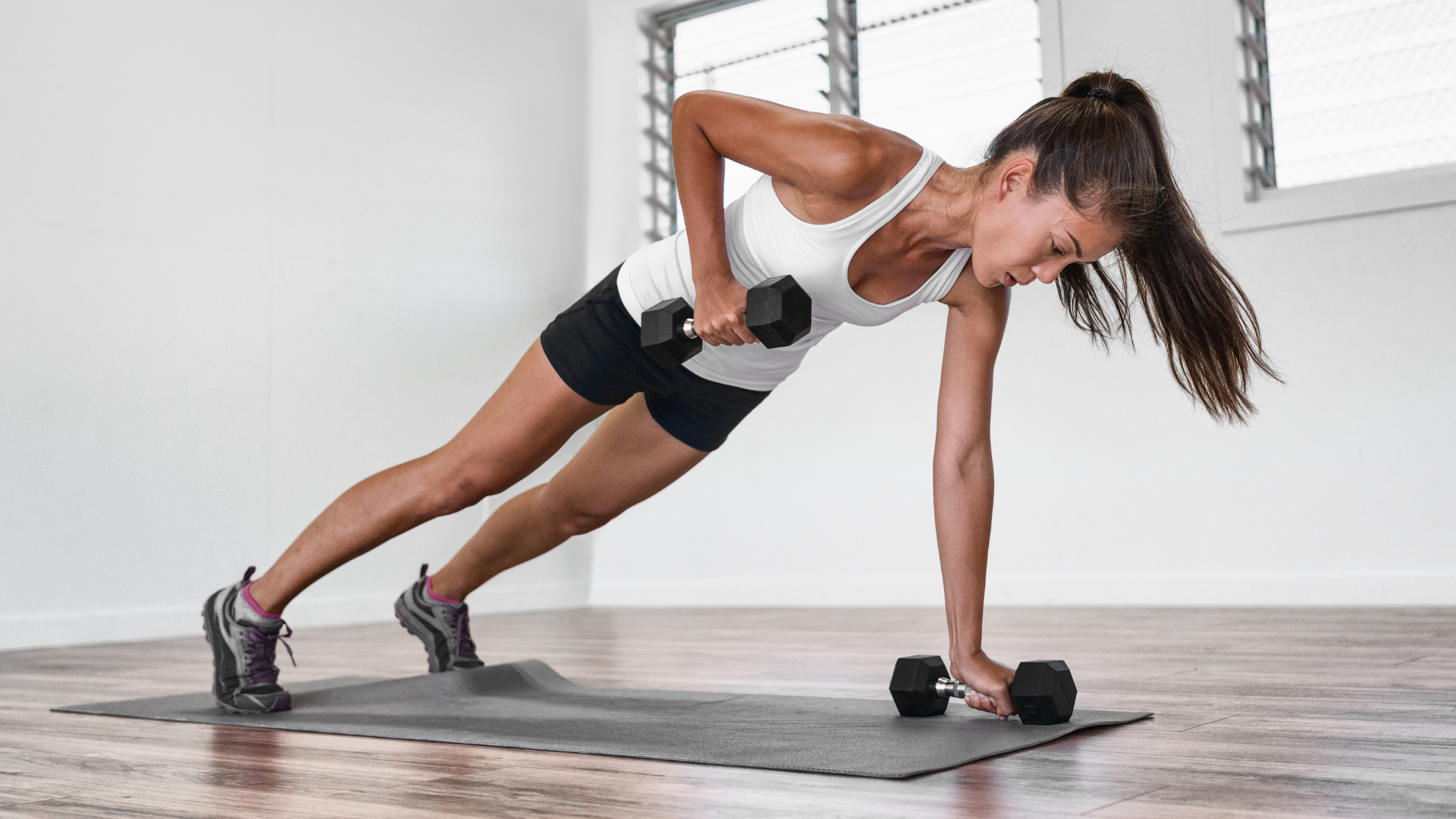
Exercise Examples: Chest-supported rows, renegade rows (pictured), lat pulldowns, pull-ups, cable rows.
Clinical Purpose: Develops the latissimus dorsi, rhomboids, posterior deltoids, and biceps. Supports spinal posture, counteracts prolonged sitting, and assists in pulling objects toward the body.
5. The Lunge (Single-Leg Unilateral Strength)
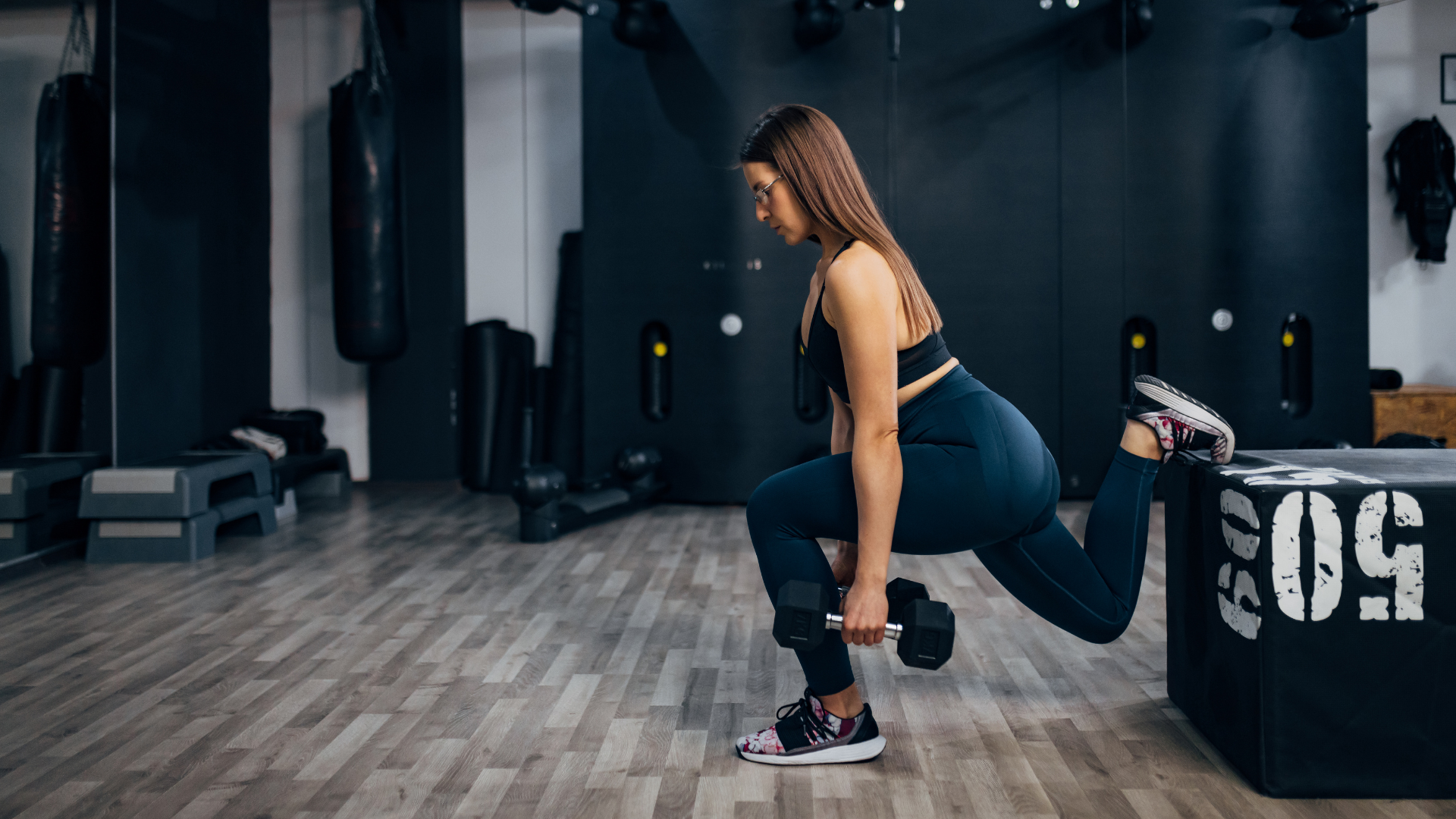
Exercise Examples: Step-ups, Bulgarian split squats (pictured above), walking lunges, reverse lunges.
Clinical Purpose: Builds single-leg strength, hip stability, and movement symmetry independently.2
6. The Carry (Loaded Core & Grip Stability)
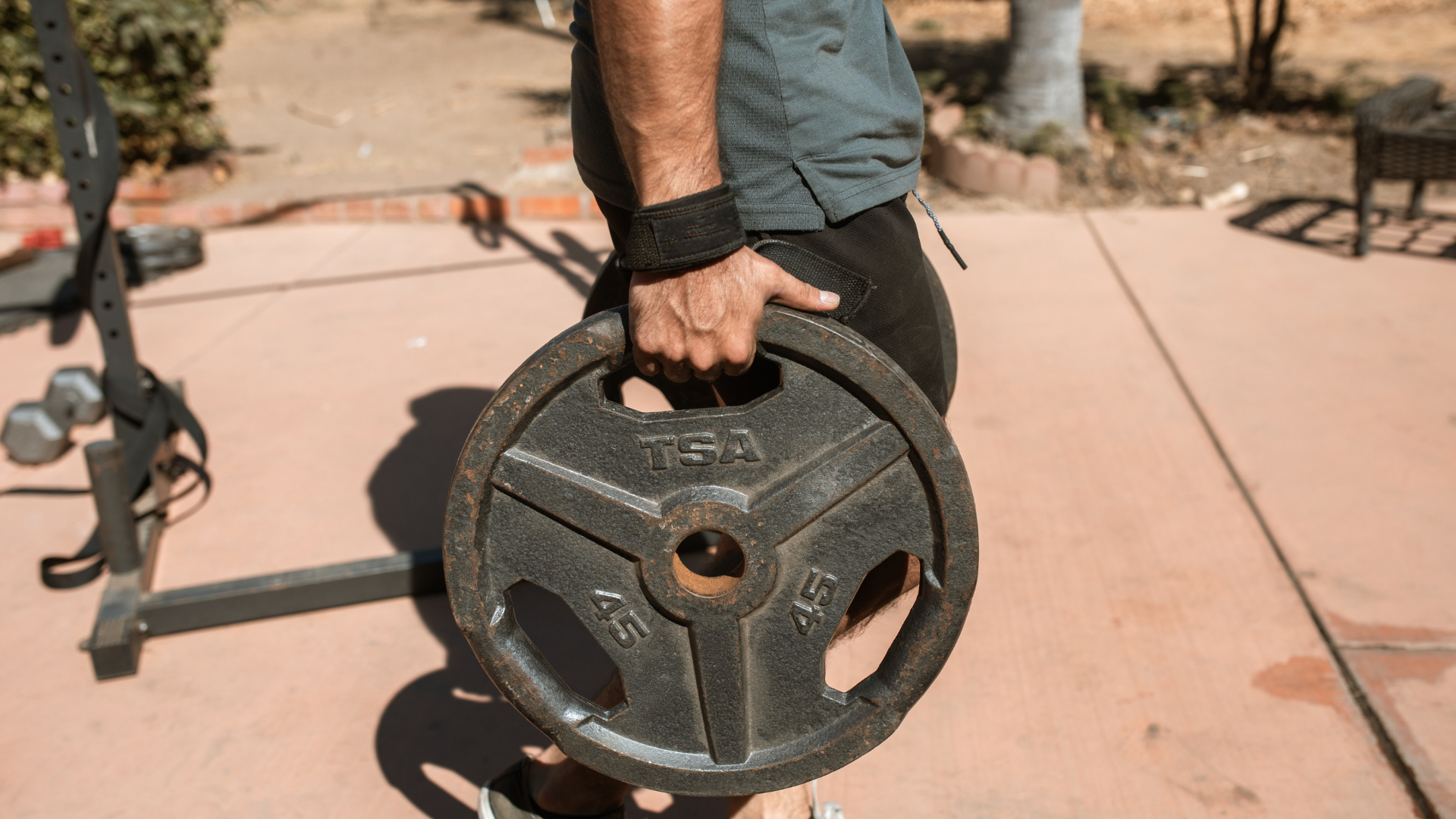
Exercise Examples: Farmer’s carries, suitcase carries (single-arm, pictured above), bear crawls.
Clinical Purpose: Challenges grip strength, shoulder-girdle stability, and core anti-lateral flexion. Translates directly to carrying groceries, luggage, or heavy household items.
5. Biomechanically Friendly Exercise Variations
While traditional barbell lifts are safe for well-trained individuals, modifying joint angles, lever arms, and ranges of motion offers clinical consensus options to tailor exercises to individual mobility constraints and manage joint stress.8,9
Barbell Back Squat → Alternative: Goblet Squat or Belt Squat
Biomechanical Rationale: Placing a heavy barbell across the upper back creates axial spinal compression. Goblet squats encourage an upright torso, while belt squats apply the load directly to the hips, significantly reducing axial spinal load while maintaining lower-extremity muscle engagement.8
Conventional Deadlift → Alternative: Trap Bar (Hex Bar) Deadlift
Biomechanical Rationale: A conventional barbell deadlift holds the load in front of the shins. Hexagonal barbells allow the lifter to stand inside the frame, centering the load closer to the body's center of mass to reduce peak moments at the lumbar spine and hip.9 However, heavy deadlifting of any variation still imposes substantial spinal compression.9
Barbell Bench Press → Alternative: Dumbbell Floor Press
Biomechanical Rationale: Lowering a barbell to the chest forces the humerus into deep shoulder extension, which can aggravate the anterior shoulder in individuals with subacromial discomfort. Lying on the floor limits humeral extension at 90 degrees, serving as a mechanical stop that allows heavy pressing without deep joint extension.
Barbell Overhead Press → Alternative: Landmine Press
Biomechanical Rationale: Pressing a straight barbell directly overhead requires full thoracic extension and shoulder elevation. The landmine press provides an angled pressing trajectory in the scapular plane, which is generally more comfortable for the rotator cuff and acromioclavicular joints.
Barbell Row → Alternative: Chest-Supported Row
Biomechanical Rationale: A standing bent-over barbell row requires the lower back and hamstrings to hold an isometric hinge while the upper back works dynamically. Supporting the chest against an incline bench eliminates static lower-back fatigue, allowing the upper back muscles to be trained safely at high effort.
Behind-the-Neck Press → Alternative: Neutral-Grip Dumbbell Press
Biomechanical Rationale: Pressing behind the neck places the humerus in extreme abduction and external rotation, increasing subacromial joint stress. A neutral-grip dumbbell press (palms facing each other) positions the arms in the scapular plane, preserving shoulder range of motion while minimizing impingement risk.
Training for Your 80s: The Long-Term Vision
Strength training is an essential clinical intervention designed to protect physical healthspan, preserve metabolic health, and maintain lifelong autonomy.1,2
When you approach resistance training as long-term preparation for the physical demands of late adulthood, your priorities naturally shift. Focus on mastering the six core movement patterns, training at a high effort (1 to 2 RIR) while avoiding unnecessary joint strain, incorporating fast concentric speed to preserve muscle power, combining strength work with dedicated balance challenges, and selecting exercise variations that accommodate your joint mechanics.
By keeping joint safety, movement quality, and consistency at the center of your routine, you ensure that your strength training supports your healthspan for decades to come.
References
Paluch AE, Boyer WR, Franklin BA, et al. Resistance Exercise Training in Individuals With and Without Cardiovascular Disease: 2023 Update: A Scientific Statement From the American Heart Association. Circulation. 2024;149(3):e217-e231.
Izquierdo M, de Souto Barreto P, Arai H, et al. Global Consensus on Optimal Exercise Recommendations for Enhancing Healthy Longevity in Older Adults (ICFSR). The Journal of Nutrition, Health & Aging. 2025;29(1):100401.
D'Onofrio G, Kirschner J, Prather H, Goldman D, Rozanski A. Musculoskeletal Exercise: Its Role in Promoting Health and Longevity. Progress in Cardiovascular Diseases. 2023;77:25-36.
Currier BS, D'Souza AC, Singh MAF, et al. American College of Sports Medicine Position Stand. Resistance Training Prescription for Muscle Function, Hypertrophy, and Physical Performance in Healthy Adults: An Overview of Reviews. Medicine and Science in Sports and Exercise. 2026;58(4):851-872.
Refalo MC, Helms ER, Trexler ET, Hamilton DL, Fyfe JJ. Influence of Resistance Training Proximity-to-Failure on Skeletal Muscle Hypertrophy and Strength: A Systematic Review with Meta-Analysis. Sports Medicine. 2023;53(3):649-665.
Hernández-Belmonte A, Buendía-Romero Á, Franco-López F, Martínez-Cava A, Pallarés JG. Adaptations in Athletic Performance and Muscle Architecture Are Not Meaningfully Conditioned by Training Free-Weight Versus Machine-Based Exercises: Challenging a Traditional Assumption Using the Velocity-Based Method. Scandinavian Journal of Medicine & Science in Sports. 2023;33(10):1948-1957.
de Souto Barreto P, Rolland Y, Vellas B, Maltais M. Association of Long-term Exercise Training With Risk of Falls, Fractures, Hospitalizations, and Mortality in Older Adults: A Systematic Review and Meta-analysis. JAMA Internal Medicine. 2019;179(3):394-405.
Layer JS, Grenz C, Hinshaw TJ, et al. Kinetic Analysis of Isometric Back Squats and Isometric Belt Squats. Journal of Strength and Conditioning Research. 2018;32(12):3301-3309.
Swinton PA, Stewart A, Agouris I, Keogh JW, Lloyd R. A Biomechanical Analysis of Straight and Hexagonal Barbell Deadlifts Using Submaximal Loads. Journal of Strength and Conditioning Research. 2011;25(7):2000-2009.
Clinical Oversight & Authorship
Physician revieweddelaeMD Clinical Team
Clinical content at delaeMD is written and reviewed by licensed physicians, grounded in peer-reviewed evidence and current clinical guidelines, and intended for education — not as a substitute for individualized medical advice. Reviews are non-sponsored, physician-directed, and conducted independently of industry funding.