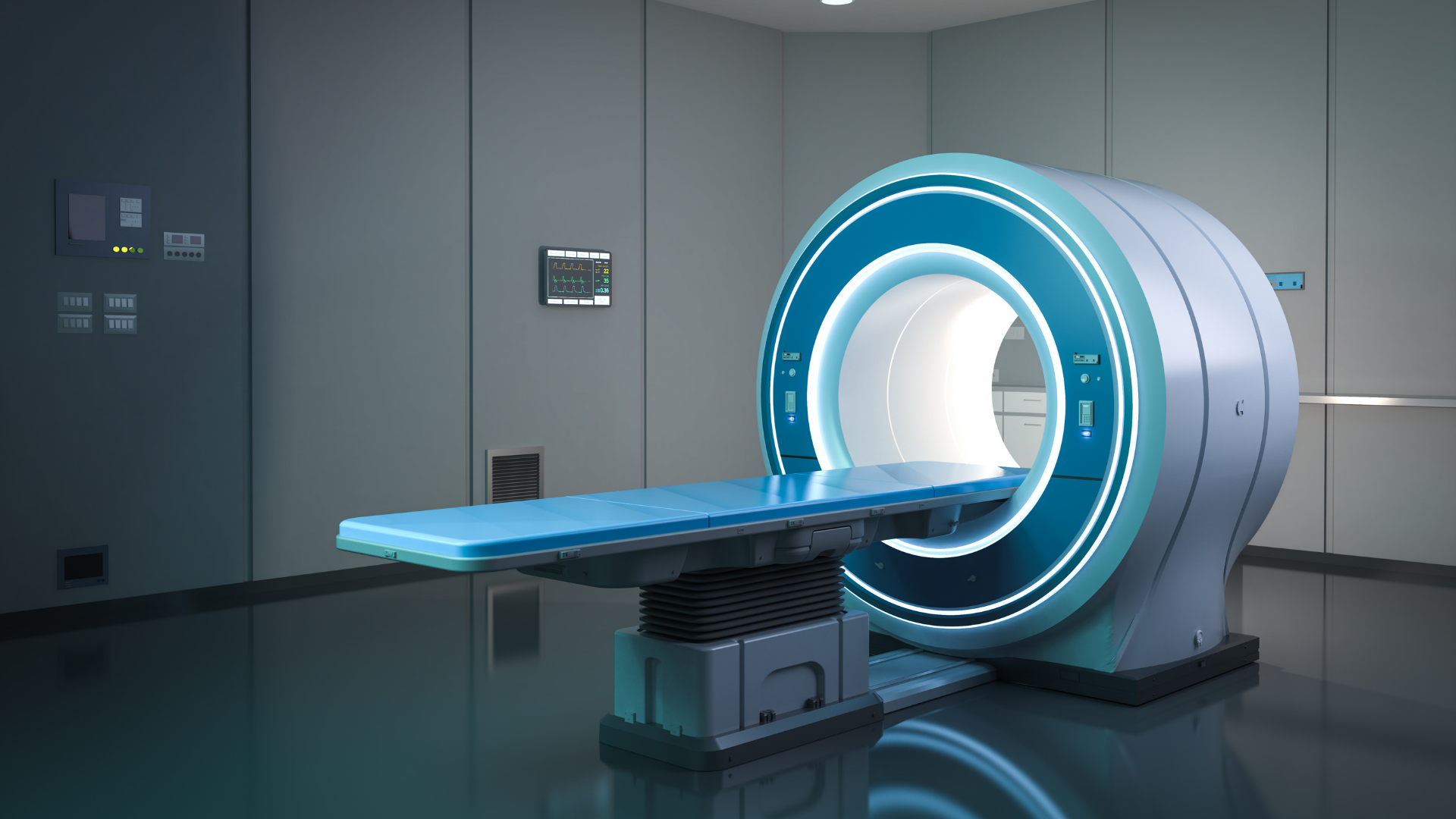
Full-body magnetic resonance imaging (MRI) has emerged as one of the most talked-about procedures in proactive medicine. Heavily promoted by high-profile media figures and direct-to-consumer wellness clinics, these non-invasive, radiation-free scans promise to peer inside the human body and spot early signs of disease long before symptoms appear.
The core motivation behind these scans is undeniable: catching cancer at its earliest possible stage (Stage 0 or Stage 1) dramatically improves treatment options and survival rates.
However, within the medical community, routine full-body MRIs in healthy, average-risk individuals remain controversial.
Is a full-body MRI a visionary tool for early detection, or is it a costly generator of unnecessary anxiety and invasive medical procedures?
Understanding both sides of the coin—and why independent physician guidance is essential—will help you determine whether this test aligns with your personal goals.
Crucial First Step: You Need an Unbiased, Trusted Physician
Before booking a scan, we strongly advise against undergoing a full-body MRI without first consulting your own personal physician.
Crucially, this doctor should be completely non-biased—meaning they do not work for, receive compensation from, or have a financial stake in the MRI facility or screening company.
Why is an independent physician so critical?
Objective Risk Assessment: An unbiased physician will look at your personal medical history, lifestyle, and family background to help you determine if an elective full-body scan is clinically appropriate for you in the first place.
Navigating the Results: A scan is only as good as the care plan that follows. You need a trusted physician who commits to reviewing the images with you, putting complex radiologic findings into clinical context, and guiding you through the follow-up decisions, blood tests, or secondary scans that may arise.
Relying solely on a direct-to-consumer clinic's internal staff creates a potential conflict of interest, as their business model depends on performing the scan.
The Promise: Catching Disease Before Symptoms Arrive
The primary argument for full-body MRI screening is straightforward: early detection saves lives.
MRIs excel at visualizing soft tissue structures throughout the brain, neck, spine, abdomen, and pelvis. They can identify solid tumors in organs like the kidneys, liver, pancreas, brain, and ovaries—often at sizes where surgical resection or targeted treatment can be curative.
Furthermore, unlike CT scans, MRIs do not expose the body to ionizing radiation, making them safe for repeat interval imaging. For individuals who prioritize knowing every available detail about their internal biology, a scan showing no actionable findings can provide immense peace of mind.
The Pitfalls: Incidentalomas, False Positives, and False Negatives
Despite the obvious appeal of looking inside the body, major medical societies do not currently recommend routine full-body MRIs for asymptomatic, average-risk adults. The reasons stem from human biology and the limits of imaging technology.
1. High Rate of Incidental Findings
Human bodies are rarely "textbook perfect." As we age, we naturally accumulate benign cysts, hemangiomas, harmless nodules, and age-related wear. In the medical world, unexpected, asymptomatic findings are called incidentalomas.
Large systematic reviews and meta-analyses evaluating whole-body MRIs in healthy adults reveal a striking reality:
True Cancer Detection Rate: Whole-body MRI detects true, actionable cancers in approximately 1.5% (1.1% to 1.6%) of asymptomatic individuals.
High Rate of Incidental Findings: Roughly 32% of scanned individuals end up with indeterminate or critical incidental findings that require additional medical investigation.
False-Positive Rates: Studies report a pooled false-positive rate of approximately 16%, though this number varies widely depending on imaging protocols and radiologist experience.
False-Negative Risk: No scan is 100% infallible. Research indicates a false-negative rate of around 2.8%, meaning small lesions or early-stage cancers can occasionally be missed.
2. The Cascading Medical Effect & Overdiagnosis
Finding an indeterminate spot on an MRI creates a clinical dilemma. To prove a spot isn't cancer, patients often face a cascade of follow-up CT scans, contrast MRIs, blood work, and invasive tissue biopsies.
This process introduces real physical risks (such as surgical or biopsy complications), significant out-of-pocket costs, and weeks of profound anxiety—all to confirm a benign finding.
Additionally, MRIs can lead to overdiagnosis: detecting slow-growing, indolent lesions that would have never progressed or caused harm during a person's natural lifetime.
3. The Unproven Endpoint: Does It Actually Reduce Mortality?
While catching a tumor early sounds like an obvious win, there is currently no randomized clinical trial data showing that routine full-body MRIs reduce overall cancer mortality in average-risk adults. Screening improves long-term health only if detecting the tumor earlier changes the ultimate outcome.
Cancers Full-Body MRIs Miss (And Emerging Multimodal Strategies)
A common misconception is that a "full-body" MRI evaluates every organ with equal precision. In reality, MRI technology has notable blind spots.
MRIs do not visualize air-filled or rapidly moving tissues well. Consequently, whole-body MRIs are poor at detecting:
Colorectal Cancer: MRIs cannot reliably evaluate the mucosal lining of the colon. Colonoscopy remains the gold standard.
Early Lung Cancer: MRIs struggle with the air-filled environment of the lungs. Low-dose CT (LDCT) is far superior for detecting small pulmonary nodules.
Skin and Cervical Cancers: Surface lesions and localized cellular changes require specialized visual exams and Pap smears.
Supplementing, Not Replacing, Guideline Screening
Full-body MRIs should never replace proven, guideline-based screening protocols—such as colonoscopies, mammograms, Pap smears, and low-dose lung CTs. They are purely supplemental tools.
To address blind spots, researchers are actively studying multimodal screening approaches. This includes pairing imaging with emerging technologies like Multi-Cancer Early Detection (MCED) blood tests (liquid biopsies such as Galleri). While MCED blood tests are still being evaluated in clinical studies and are not yet part of standard guidelines, combining blood-based biomarkers with targeted imaging represents an evolving area of preventive research.
Best-Case vs. Worst-Case Scenarios
To decide if full-body screening aligns with your goals, it helps to weigh the best- and worst-case outcomes alongside their real-world likelihoods.
Scenario 1: The Best-Case Outcome
What Happens: The scan detects an early, asymptomatic, localized Stage 1 renal or pancreatic tumor. You undergo a targeted, minimally invasive surgery that cures the cancer before it metastasizes.
The Likelihood: Low (~1.5%). This is a high-value, life-saving event, but statistically rare in an asymptomatic population.
Scenario 2: The Worst-Case Outcome
What Happens: The scan flags an indeterminate 8mm liver nodule. You spend six months undergoing repeat contrast scans, specialized blood work, and an invasive needle biopsy. You experience intense anxiety, out-of-pocket costs, and minor biopsy complications—only to learn the nodule was a harmless hemangioma.
The Likelihood: Moderate (~16% false-positive proportion; ~32% incidental finding rate).
Scenario 3: No Actionable Findings
What Happens: Almost every adult scan reveals minor, harmless quirks (such as tiny benign cysts or age-related spinal wear). However, for about 65% to 70% of individuals, the scan uncovers no clinically relevant or suspicious findings requiring medical follow-up, providing baseline reassurance.
The Likelihood: Moderate (~65% to 70%).
The Verdict: A Personal Choice Based on Your Risk Tolerance
Full-body MRI screening is neither inherently "good" nor "bad"—it is a diagnostic tool with specific trade-offs.
Choosing whether to undergo screening ultimately depends on your personal philosophy, family history, and emotional tolerance for uncertainty:
Screening May Suit You If: You have a high tolerance for potential false alarms, are financially prepared for out-of-pocket follow-up testing, experience severe anxiety about unmonitored risks, or have strong genetic/family risk factors that justify aggressive surveillance.
Screening May NOT Suit You If: Waiting on an "indeterminate" scan result would cause you overwhelming anxiety, you wish to avoid invasive follow-up procedures for benign findings, or you prefer sticking strictly to interventions backed by randomized mortality trials.
Compute Your Personal Probabilities
Before booking a scan, it is essential to understand your individual mathematical odds rather than relying on marketing claims.
We developed a free, interactive tool to help you visualize what a scan might uncover based on your age, risk profile, and screening choices.
Explore our free Advanced Cancer Screening Simulator to compute the probabilities of true positives, false alarms, and follow-up requirements if you were to undergo a full-body MRI or liquid biopsy (Galleri).
The Bottom Line
Proactive medicine is about making informed, conscious decisions rather than following internet trends.
If you choose to pursue full-body MRI screening, do so as part of a thoughtful strategy: partner with an independent physician you trust, maintain your guideline-based screenings, and ensure you have a clear clinical plan in place before stepping inside the scanner.
References
Martins da Fonseca J, Trennepohl T, Pinheiro LG, et al. Whole-Body MRI for Opportunistic Cancer Detection in Asymptomatic Individuals: A Systematic Review and Meta-Analysis. European Radiology. 2026;36(3):1813-1823.
Kwee RM, Kwee TC. Whole-Body MRI for Preventive Health Screening: A Systematic Review of the Literature. Journal of Magnetic Resonance Imaging. 2019;50(5):1489-1503.
Dai KZ, Jambawalikar SR, Kang SK. Whole-Body MRI Screening of Average Risk Populations: Promises and Controversies. Journal of Magnetic Resonance Imaging. 2026;63(5):1217-1223.
National Comprehensive Cancer Network. Genetic/Familial High-Risk Assessment: Breast, Ovarian, Pancreatic, and Prostate. NCCN Clinical Practice Guidelines in Oncology. Updated February 2026.
Basar Y, Alis D, Tekcan Sanli DE, et al. Whole-Body MRI for Preventive Health Screening: Management Strategies and Clinical Implications. European Journal of Radiology. 2021;137:109584.
Ahlawat S, Debs P, Amini B, et al. Clinical Applications and Controversies of Whole-Body MRI: Expert Panel Narrative Review. AJR. American Journal of Roentgenology. 2023;220(4):463-475.
Cieszanowski A, Maj E, Kulisiewicz P, et al. Non-Contrast-Enhanced Whole-Body Magnetic Resonance Imaging in the General Population: The Incidence of Abnormal Findings in Patients 50 Years Old and Younger Compared to Older Subjects. PLoS One. 2014;9(9):e107840.
Raz DJ, Nehoray B, Ceniceros A, et al. Feasibility of a Cancer Screening Program Using Multicancer Early Detection Testing and Whole-Body Magnetic Resonance Imaging in a High-Risk Population. Cancer. 2025;131(1):e35709.
Editorial Oversight & Clinical Review
delaeMD Clinical Team
Clinical content at delaeMD is written and reviewed by licensed physicians. Articles are grounded in peer-reviewed evidence and current clinical guidelines, and are intended for education — not as a substitute for individualized medical advice.